
Where Vermilion County Crime News Appears
No single feed collects every Vermilion County arrest. Coverage arrives piecemeal from a mix of outlets. The Sheriff's official site is the sensible first stop for agency information, though it posts no daily booking roster. Vermilion County First and the Vermilion Times handle county happenings. WAND-TV covers central Illinois. The News-Gazette and Commercial-News report on Danville and the wider region.
WHPO Radio stands apart. Its recurring Hoopeston Police Blotter describes incidents, citations, releases, notices to appear, and transports, usually without booking photos. A news story can point you toward the right agency and date. It cannot tell you everyone booked at the Vermilion County Jail.
Note: Check a story's date, byline, image caption, named agency, and source attribution before treating any detail as an official statement.
Vermilion County News Outlet Guide
Official records sit at the top of this table for a reason. News stories help you spot a case and get context. Still, each outlet picks its own pace and pictures. Judge every story by its caption and its source.
| Outlet | Coverage | Photos? | Where |
|---|---|---|---|
| Vermilion County Sheriff | Official agency pages, investigations, tips, and public-safety information | Only when the agency chooses and law permits | Sheriff website |
| WHPO Radio | Recurring Hoopeston Police Blotter and monthly archives | Usually no booking photo; generic images may appear | WHPO Blog |
| Vermilion County First | Danville and county event stories | File, agency, folder, or illustrative images vary | Local site |
| Vermilion Times | Event-driven local crime and public safety | Story-specific, not automatically a mugshot | Crime section |
| WAND-TV | Danville, Vermilion County, and central Illinois | Agency, scene, file, or video-still images | Crime section |
| News-Gazette | Regional daily courts and police coverage | Varies; no county mugshot gallery verified | Main site |
| Commercial-News | Danville and regional newspaper coverage | No routine booking-photo practice verified | Main site |
| Vermilion Weather Live | Reposted or linked local and regional leads | Inherited from linked sources | News links |
The captured Vermilion Times crime section illustrates one event-driven local source in the inventory.
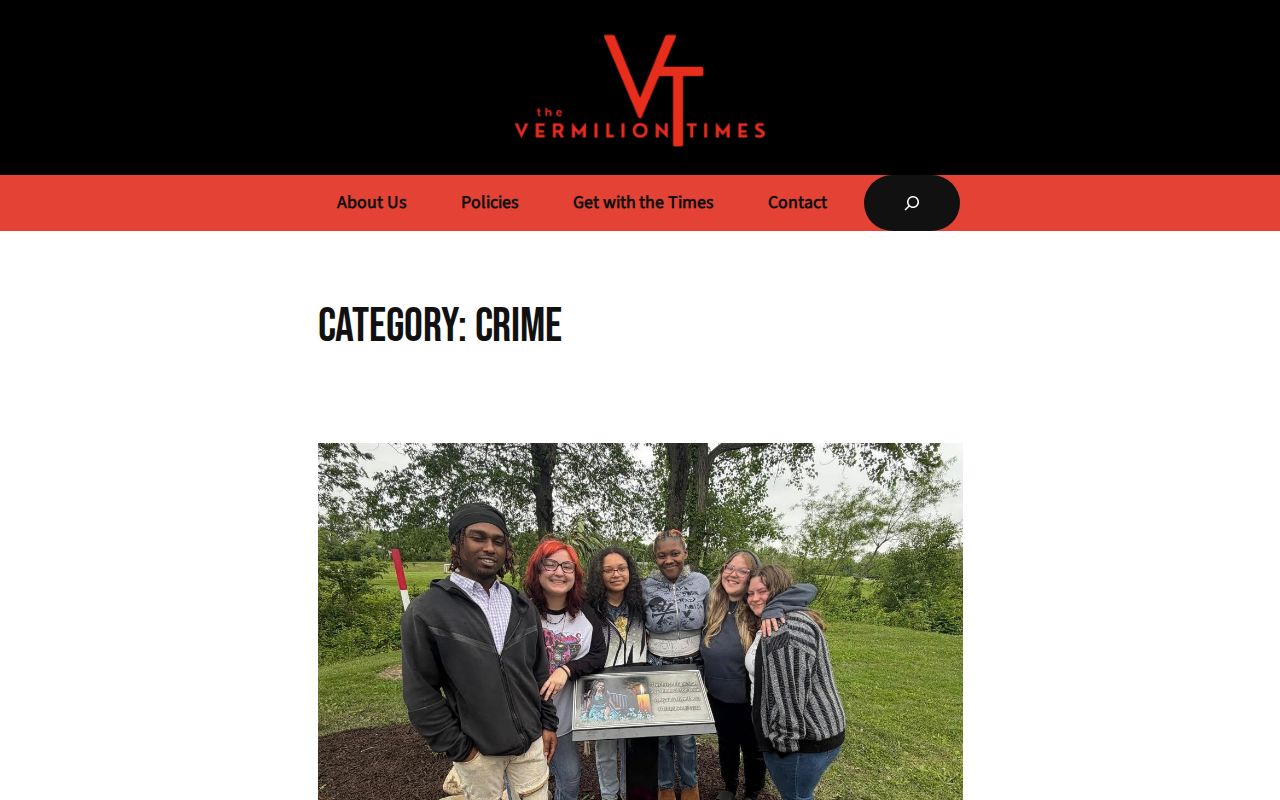
The image here shows the outlet and the section page itself. It reflects nothing about any person named in a story or where that person is now.
How Vermilion County Photos Reach News
How does a photo end up in the news? Several paths exist. An agency may release it. A reporter may request it through records channels. It can come from a court file, a public meeting, or a separate assignment at the scene. Illinois arrest-report law lists a photograph, when one exists, among the arrest-report information an agency must consider releasing. That wording is narrow, though. It does not oblige Vermilion County to post images online.
Captions do more work than people think. The phrase "Photo from Danville Police" tells you who supplied the file and nothing more. It might be a booking photo. It might be an older file picture from a prior event. It could be a video still showing a street or an official rather than a defendant. The honest approach labels a photo exactly the way the source labels it, without pasting it into a fresh gallery.
Vermilion County publishes no booking-photo policy and no regular release schedule. Want to know if an image exists? Ask the police department that handled the arrest or the county FOIA office. A direct question beats guessing from one news story. Also note that a lawful exemption can let an agency withhold material entirely.
From Vermilion County Story to Record
Treat the story as a lead, not the destination. Before you search official sources, write down the exact name spelling, the date of the event, the place, the arresting agency, and any case number listed. Those details make the lookup far easier.
- Open the named Sheriff's Department or city police source and look for the original release.
- For a county booking, check the Vermilion County booking and feed guide. No official online roster or daily feed was verified, so a focused records request may be needed.
- Use the Circuit Clerk case search after filing, matching the person and case type rather than relying on name alone.
- Read later docket entries for amended charges, release conditions, dismissal, acquittal, supervision, plea, or another disposition.
- Return to the article and distinguish what was known on publication day from what the official record later shows.
Hoopeston's Distinctive Police Blotter
Hoopeston has one reliable running blotter: the WHPO monthly archive. Posts show up when Hoopeston Police activity can be shared. A typical entry lists an incident number, the date and time, a location, what officers did, the charge or citation wording, and what followed. That is more detail than most county outlets offer.
The process notes are the real prize. Entries separate a release, a notice to appear, a transport to the Danville Public Safety Building, and a transport to Vermilion County Jail. Those are four different outcomes. Someone released on a notice to appear may never sit in county custody at all. A transport entry still says nothing about how the court case ended.
Keep the source in perspective. WHPO republishes police information; it is not the Sheriff and not a full county database. Booking photographs rarely appear in its blotter posts. The archives work well for digging up an older Hoopeston lead, but Danville and Westville incidents do not get the same coverage.
Vermilion County Court Codes After News
A headline says "arrest" and leaves you guessing about the case type. The Circuit Clerk's official criminal-case guide closes that gap. CF means felony. CM means misdemeanor, DT covers DUI, TR is traffic, and CC marks criminal contempt. Juvenile matters fall under JA, JD, and J codes, and those files carry their own privacy limits.
| News-stage fact | Official follow-up |
|---|---|
| Police say an arrest occurred | Request the originating arrest report and confirm its event date. |
| Transport to county jail reported | Ask the Sheriff about the booking record; no public roster is verified. |
| Charge named in a story | Check the Clerk for the filed case and any amended count. |
| Release or notice to appear | Follow the scheduled court event, not a custody assumption. |
| Older article remains online | Read the disposition for dismissal, acquittal, plea, supervision, or conviction. |
Charges move through steps. Knowing them helps you read the news. The State's Attorney lays out the sequence: an investigation can bring an immediate arrest or a requested warrant, felony charges after arrest need approval, and a judge decides release or detention. The first story on a case is rarely the final one.
Secondary Vermilion County Mugshot Indexes
Secondary mugshot sites with a Vermilion County label exist. RecentlyBooked and Mugshots.com both carry county-tagged pages. Neither is a Sheriff record. They lag, omit, duplicate, and hold old material, and a listing there proves nothing about who is in the Vermilion County Jail today.
The two differ in shape. RecentlyBooked runs a dynamic local page and says its material comes from public Sheriff or jail records. Mugshots.com keeps a historical county archive with filters for year and first name. Neither outranks the Sheriff, the arresting police department, the Circuit Clerk, or the court file where the case ends. Watch for the other sites, too. Busted Newspaper, Arrests.org, and Mugshots.zone show no Vermilion County, Illinois section, and a page marked Vermilion, Ohio belongs to a different state. Generic jail-style pages are just as weak, with no proof of government custody or solid sourcing.
Note: A county label on a private index does not establish current custody, a complete feed, accurate identity, or final court outcome.
Reading Vermilion County News Archives
WHPO's monthly pages are the easiest recurring archive to dig through. The News-Gazette takes a different path. Its archive runs through NewsBank, and every other outlet keeps story pages in its own way. If you trace an older report, write down the source URL and the date it ran.
An archive is not a live booking feed. Vermilion County First, the Vermilion Times, WAND, the News-Gazette, and the Commercial-News print stories when events happen. None of them promises every arrest in the county. A report might land the same day or show up much later. No verified local-news schedule exists that would guarantee complete coverage of the county's bookings.
Where you go next depends on the stage of a case. Someone moved from county booking into state custody after sentencing belongs in the Illinois Department of Corrections search, not in a local arrest lookup. For court history, the Clerk's case record beats the newsroom. It can show what happened long after the headline faded.
Crime Coverage Across Vermilion County Cities
Coverage is not spread evenly across the county. Danville gets the most attention, with Vermilion County First, the Vermilion Times, WAND, the News-Gazette, and the Commercial-News all reporting events there. Hoopeston has the recurring WHPO blotter. Westville is the gap. No dedicated mugshot feed was verified there, though a major Westville event may still surface in the broader county outlets.
A city label on a story is only a starting point. Danville Police, Hoopeston Police, and Westville Police may hold the initial arrest report even after the person lands in the Vermilion County Jail. A county story might not even be a fresh booking. It could involve another town, state custody, or a court proceeding.
Attribution matters too. When an outlet republishes another newsroom or boils down an agency release, keep that credit attached. Follow the chain back to the original police, Sheriff, or court source. That habit keeps a secondhand rewrite from stretching a narrow claim into something bigger.